
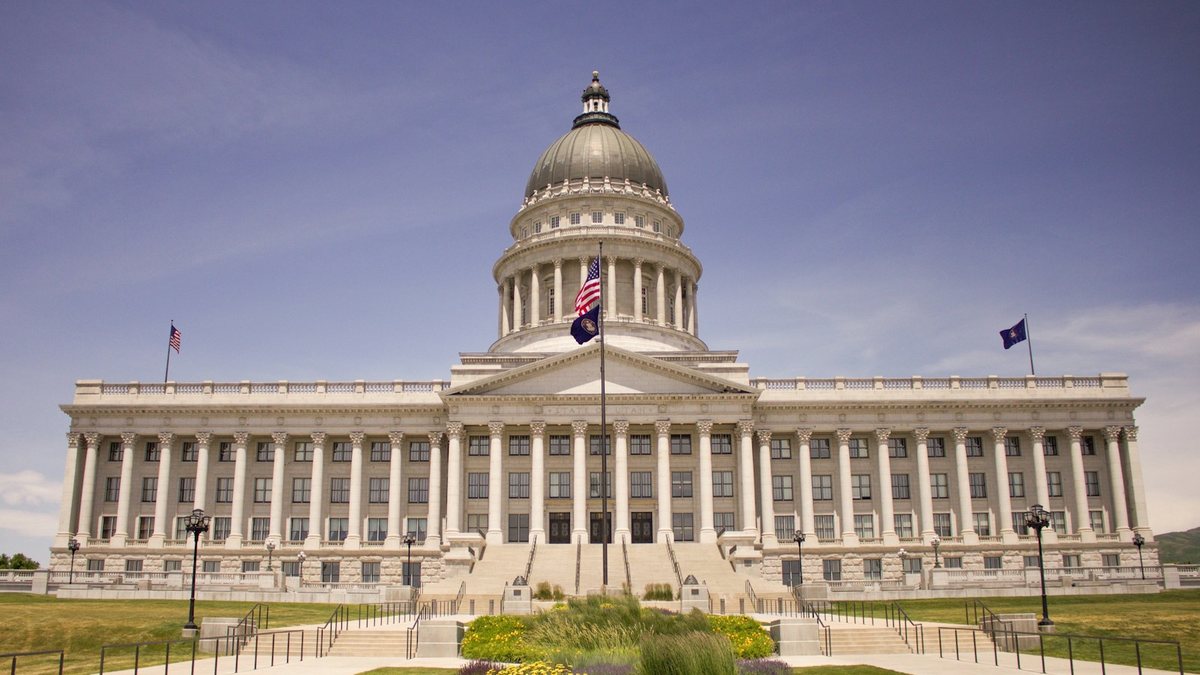
The US Commodity Futures Trading Commission (CFTC) on October 27 sued the state of Utah and Attorney General Derek Brown in federal district court, asking a judge to stop the state's effort to shut down prediction markets such as Kalshi. It is the tenth lawsuit the agency has filed against a state over the same question: who has the final say over event contracts.
What Utah wants and how the CFTC answered
Last week Utah sued Kalshi, calling the platform a public nuisance that is causing substantial ongoing harm and alleging violations of state gambling law, including on sports, election and political contracts. The state is also seeking to recover up to $60 million in profits tied to event contracts. Attorney General Brown put anyone offering gambling in Utah on notice that it is illegal.
The CFTC responded with a complaint seeking declaratory and injunctive relief. Chairman Michael Selig said Utah is trying to shut down prediction markets across a wide range of contracts, and that Congress made the CFTC the federal regulator with sole responsibility for overseeing them. The core argument is federal preemption: congressional law should override state rules.
A tangled legal picture
Before Utah, the CFTC sued Arizona, Connecticut, Illinois, New York, Wisconsin, Minnesota, Rhode Island, New Mexico and Kentucky. It has also filed briefs in four federal appeals courts and one state supreme court.
The courts have not settled the matter. Three federal appeals courts have issued two decisions favoring states and one favoring Kalshi. In Utah itself, a federal judge has so far sided with the state, and that ruling is under appeal. Many observers expect the dispute to reach the Supreme Court.
The disagreement runs inside Washington's own circle, too. Former CFTC chairman Gary Gensler told the Supreme Court in a brief that the Dodd-Frank Act did not transfer jurisdiction over sports betting from the states to the CFTC, and former Senator Chris Dodd, one of the law's authors, filed a brief backing the states.
Why crypto should pay attention
Prediction markets are no longer a niche corner of betting. Platforms including Polymarket are closely tied to the crypto ecosystem and attract flows into contracts on elections, macro events and asset prices. If the CFTC prevails, these venues get one national rulebook; if states prevail, they may face dozens of different ones.
The agency is fighting all this while its legal staff has been cut, as the Trump administration works to shrink federal regulators. The federal-versus-state contest is likely to stay long and costly.
What to watch next
Key markers include Utah's response to the complaint, the outcome of the appeal in the Kalshi case, and whether the Supreme Court takes up the jurisdiction question. A single ruling would decide whether these platforms operate nationwide or are carved up state by state.
What it means for traders
The news has no direct price impact, and markets are focused elsewhere. Bitcoin is trading just under $81,000, up roughly 1.4% to nearly 2% depending on the measure, while Ether is near $2,350, with traders waiting for the Fed's rate decision today and Chair Kevin Warsh's press conference; they are looking for signals about a possible rate increase in December.
For traders, the relevance is long-term legal risk for derivatives and prediction venues: state-by-state rules could disrupt services, affect liquidity in related contracts and add volatility to tokens linked to this sector. There is no funding-rate or open-interest data specific to this group, so no figures are given here. When positions are large, the position and liquidation-price calculator helps size risk, and the exchange ranking is a useful reference when choosing a derivatives venue.